
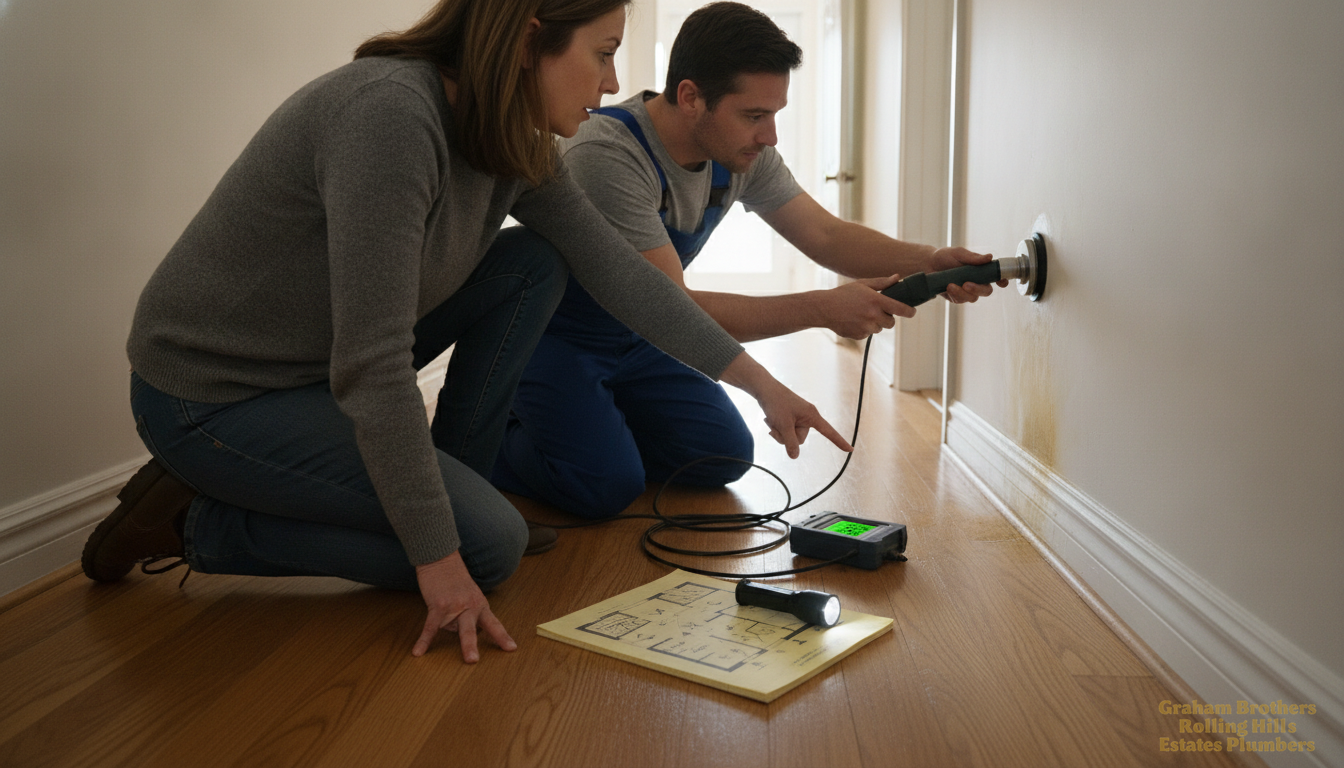
Why Hidden Water Leaks Are So Dangerous
Of all the plumbing problems Rolling Hills Estates homeowners face, hidden leaks are among the most destructive — precisely because they're out of sight. A pinhole in a copper supply line inside a wall or under a concrete slab can leak slowly for weeks or months before any visible sign appears. By that point, wood framing may be saturated, insulation may be growing mold, and slab concrete may have begun to erode.
The Palos Verdes Peninsula's hillside geology also means that water migrating through or under a foundation can have amplified effects on soil stability — an additional reason why catching leaks early matters here more than in many other areas.
Common Types of Hidden Water Leaks in Residential Homes
- Slab leaks: Breaks or pinholes in water supply lines that run beneath the concrete foundation. These are especially common in homes with copper or galvanized pipes that have aged and corroded.
- Behind-wall leaks: Supply line failures, pinhole corrosion, or loose connections inside wall cavities that wet insulation and framing silently over time.
- Under-sink and fixture supply leaks: Slow drips from braided supply lines, compression fittings, or shut-off valves that go unnoticed under cabinet clutter.
- Irrigation and outdoor line leaks: Breaks in underground irrigation supply lines or outdoor hose bib connections that saturate soil without ever entering the home.
Warning Signs You May Have a Hidden Leak
Because the leak itself isn't visible, you have to watch for secondary clues. The following symptoms are among the most reliable indicators that a hidden leak is present somewhere in your home's plumbing system:
- An unexplained spike in your water bill: If your usage habits haven't changed but your bill has increased noticeably, water is going somewhere it shouldn't.
- The sound of running water with all fixtures off: Shut off every tap, appliance, and irrigation zone, then listen near walls and floors. Audible water movement is a strong sign of a leak.
- Warm or hot spots on the floor: A slab leak on a hot water supply line will warm the slab directly above it. This is often noticeable on tile or hardwood floors.
- Damp or discolored drywall: Water stains, bubbling paint, or soft spots in walls or ceilings indicate moisture accumulation behind the surface.
- Mold or mildew odors without a visible source: Persistent musty smells in a room that otherwise appears dry often trace back to hidden moisture from a slow leak.
- Reduced water pressure throughout the home: A significant ongoing leak can drop supply line pressure noticeably, particularly if the leak is on the main supply side.
- Cracks in flooring or baseboards: Sustained moisture from a slab leak can cause tile grout to crack, hardwood to warp, or baseboards to separate from the wall.
The Water Meter Test: A Simple DIY Check
Before calling a plumber, you can do a quick self-test to confirm a leak is present. Shut off every water-using fixture and appliance in the home — including the ice maker, irrigation system, and water softener if you have one. Go to your water meter and check the low-flow indicator (usually a small triangle or dial). If it's spinning with everything off, water is moving through the system and a leak is almost certainly present.
Note the meter reading, wait 30 minutes without using any water, and check it again. If the reading has changed, the test confirms an active leak. This tells you it's time to call a professional — but it doesn't tell you where the leak is, which is where specialized equipment comes in.
How Professional Leak Detection Works
Modern leak detection doesn't require tearing open walls or jackhammering slabs to find the source. Our leak detection and repair team uses two primary tools to locate leaks precisely and non-invasively:
- Acoustic listening devices: These amplify the sound of water escaping under pressure through a pipe wall, allowing a trained technician to trace the leak's location by ear through concrete, tile, and drywall without opening anything.
- Electronic leak detection equipment: Electromagnetic and thermal sensors detect anomalies in moisture levels and temperature distribution beneath floor surfaces, narrowing down the leak location to a specific area before any access point is opened.
The combination of these methods allows us to pinpoint the leak precisely — meaning when we do need to open a wall or floor for repair, we open only the minimum area necessary. This saves significant money on restoration and keeps disruption to your home as limited as possible.
What Happens After the Leak Is Found
Once we've located the leak, we complete a durable, code-compliant repair using quality materials appropriate for the pipe type and location. For slab leaks, repair options include spot access and direct repair, pipe rerouting around the damaged section, or — in cases of widespread pipe deterioration — a recommendation for whole-home repiping to eliminate recurring issues. For behind-wall leaks, we open the minimum necessary access, replace the damaged section, and restore the connection securely.
If the leak investigation reveals broader pipe aging or corrosion throughout the home, we'll discuss those findings honestly and present your options. In some older Rolling Hills Estates homes, multiple spot repairs over time can cost more than a planned repiping project — and we'll give you the information you need to make the right decision for your situation.
Related services you may need following a leak repair include water heater inspection or repair if the leak affected supply lines to the unit, or drain cleaning if secondary pipe issues were noted during the investigation.
Don't Wait — Leaks Get Worse, Not Better
A slow leak never resolves on its own. The pressure differential that created the pinhole will continue to widen the opening over time, and the moisture damage to surrounding materials accumulates with every passing day. Acting at the first sign of a problem is always less expensive than addressing the damage after it's spread.
Graham Brothers Rolling Hills Estates Plumbers serves homeowners throughout Rolling Hills Estates and nearby communities including Rolling Hills, Palos Verdes Estates, Rancho Palos Verdes, Harbor City, and Torrance. We're available Monday through Sunday, 8 AM to 6 PM, for same-day leak detection appointments.
If you suspect a hidden leak in your home, call us now at (424) 424-8672 or email [email protected]. The sooner we find it, the less it costs to fix.
Confirm Availability
Call +14244248672 or fill out our online form for a free, no-obligation quote.
Request Free Quote